The TrueManhood Podcast – Episode 11 Theology of the Body
 Dave talks about both what the Theology of the Body is and its importance in the lives of everyone. This vital teaching in the Roman Catholic Church could very well solve the problems in the world.
Podcast: Play in new window | Download
Subscribe: RSS
The TrueManhood Podcast Episode 9 – Porn Addiction: Part 1
April 16, 2018 by admin
Filed under Blog, Evangelization, manliness, Parenting, Podcast, pornography, Virtue
 In this episode on pornography, part 1, Dave DiNuzzo opens up about his porn addiction, and a bit of how he overcame it, what porn is, why it’s bad, and how to help ourselves and our kids. Watch for part 2 coming soon, and watch for the upcoming episode on “The 5 Step Plan.” TrueMan up!
Podcast: Play in new window | Download
Subscribe: RSS
The TrueManhood Podcast Episode 7 – My Confession
April 2, 2018 by admin
Filed under Blog, Evangelization, Faith, manliness, Podcast, Scriptural Examples, Virtue

In the 7th episode of The TrueManhood Podcast, Dave makes his confession. Whether you’ve confessed recently or not, get there and do it! If you’re not Catholic and want to know more, contact Dave@TrueManhood.com.
Podcast: Play in new window | Download
Subscribe: RSS
The TrueManhood Podcast Episode 3 – The Devil’s Top 5 Lies
 The TrueManhood Podcast, brought to you by TrueManhood Men’s Ministry, in Episode 3, will examine what we believe are the Devil’s Top 5 Lies to win souls. Lie #1: Pornography. #2: Decay of Marriage/Okay of Divorce. #3: Abortion/Contraception. #4: Gender Agenda. #5: Atheism/Secular Humanism
Podcast: Play in new window | Download
Subscribe: RSS
Onions: My Barrier to Holiness
February 19, 2018 by admin
Filed under Blog, cultural manliness, Fatherhood, Virtue
Lent is intended to be a season of penance, of self-reflection, of growth, of personal introspection, and ultimately, we should be working to “die to self”. I’m terrible at it. Here’s a lame story. Let’s call it the “onion-idiot story.” I’m the onion-idiot.

Last Friday was the 1st Friday of Lent 2018, and my beautiful wife, Catherine, (who is a phenomenal chef!) made a meatless cheese and broccoli soup. (It was even Keto-friendly, which we are currently utilizing as our fueling system. Perhaps more on eating Keto in the future?) The soup was VERY tasty. The ingredients were fresh. The flavor was amazing. It probably wasn’t much of a Lenten sacrifice, other than the fact that it didn’t have bacon in it! There was only one problem: onions.
I HATE ONIONS.
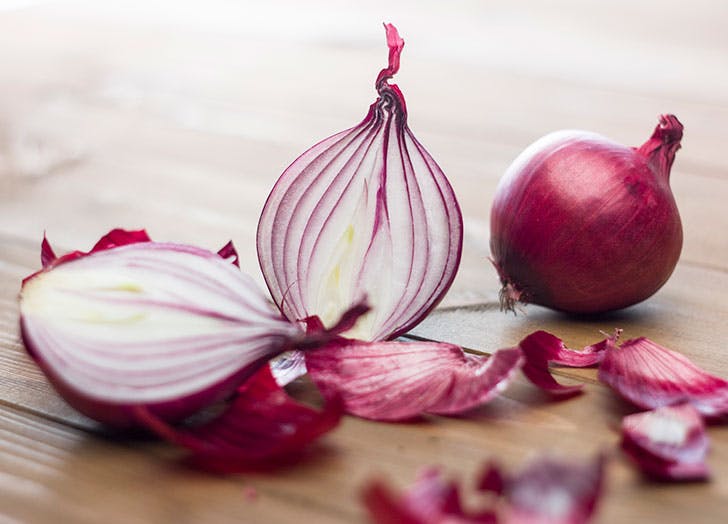 It’s not the taste. It’s not the texture. It isn’t even that they make you cry. It’s the smell. They stink. Terribly. Whenever I smell an onion, it is as if it embeds its stink in my nasal cavity, and won’t evacuate the premises for days on end. It’s stench digs deep into my skin’s pores, and it won’t leave. I hate onions. [I apologize if you like onions… this has nothing to do with you, it’s my issue.] And I’m assuming you’re seeing where this is going.
Catherine knows this about me, and hasn’t cooked onions (one of her favorite ingredients!) in our home for years – all because she knows, very explicitly, how I feel. I’m very grateful. And how do I show her how grateful I am? I complain. I make it known just how bad it smells in the house. I put every sort of smell-good mechanism that we own directly in the ‘on’ position. I turned on the vanilla-scented burners, sprayed the air freshener, and even opened up windows and doors on a cold February day. The smell was still in the… well… everything. Yuck.
 Saturday rolled around and Catherine wanted to eat leftovers. She considered – again, because of how much she loves me – taking the soup leftovers over to her parent’s house to warm and eat it there, just so the onion smell wouldn’t be present in our home again. I still complained. I still made childish comments. Then, in my only moment of reasonable interaction surrounding these onions, I got the leftovers out, pulled out the bowl, and warmed up the soup for her.
I had already failed miserably in terms of “dying to self”. What a stupid thing, too. Onions. Onions are my barrier to holiness. I need to learn to keep my mouth shut, bear difficulties with humility, and realize that onions (read that “my own preferences/wants/desires/me-me-me”) are keeping me from true holiness. If we were to apply this to anything else, especially something that matters, we’d hopefully see that when we die to self, we love others. When we love others, we fulfill who we are as men. The culture is extremely interested in destroying the idea that men can love. That love, which they reduce to a mere emotion, is feminine. Love, in actuality, is so much more and is required for authentic masculinity.
There are countless exercises that we can all work on to die to self. And some might think that because I’ve been in this thing we call the Christian journey for so long that I’d have this down, but I don’t. Can you believe how ridiculous I am?!
In order to get better at something, we need to practice it and rely on God’s grace! So, here’s what I’m going to do today to die to myself: first off, I’m going to go home and tell my wife that I love her, give her a big, meaningful hug and kiss, and ask her about her. Nothing to do with me. Next, I’m going to find 5 little ways (one per my wife and 4 children) to choose someone else’s preference and never make mention of it. And, I’m going to try to sustain that every day… slowly working to lose my own preferences (ultimately, the goal is to become selfless in all things, and not selfish, ie: prideful) and offering up in prayer my ‘suffering’ for their sanctification. If you struggle with dying to self, try it with me.
TrueMan up!
“Tuesdays with Daddy” are BACK!
February 5, 2018 by admin
Filed under Blog, Fatherhood, Tuesdays with Daddy
 In the early days of TrueManhood, going back to the earliest version of these posts in November of 2009, I began writing posts entitled “Tuesdays with Daddy”. At the time, because I worked lots of nights and weekends, I was able to work my schedule so that I could stay home on Tuesdays, which afforded me special time with my children. Back in 2009, my wife and I had our first two children; our young daughters… only 2 and 1 years old. At that point, parenting – especially the aspect of being a great father – was foremost on my mind. I was trying to figure out just how to parent and wanted to give my kids everything they could ever need, especially a spiritual foundation that was strong in our Lord Jesus Christ and His Church. I wanted to be a super dad. Now, nearly a decade later, I still want to give them everything, and I work hard to be a super dad, but it looks a bit different.
Experience. Wisdom. Suspense. Heartache. Frustration. Exhaustion. Trial and error; okay, maybe more error than anything. Lots of words can be used to describe parenting. However we slice it, life comes at us hard and fast, and kids develop quickly, and as parents, we have to stay on top of our game. These days, my four children are in such a cool place. They are incredibly active (involved in great academic endeavors, playing numerous team sports, training in mixed martial arts, studying piano and voice, becoming young chefs, and open to all kinds of activities and experiences!), not to mention that they are all at the ages where we can begin to have deep conversations that are meaningful, formative, and long-lasting. Their spiritual formation is “on point”, as the cool kids say, and they can reasonably make their way through questions of faith, apologetics, and morals. They’re pretty young for those types of deep convos, but I embrace it and can’t wait to share more with you! My wife tends to meet with counseling clients on Tuesday afternoons and evenings, and that means that I find myself back with some special time with them on Tuesdays! Hence, “Tuesdays with Daddy” are back. I likely won’t be posting every Tuesday, but when good content pops up, you’ll be the first to read about it.
 This first-post-back, I don’t have a radical story from Tuesday. Rather than take you through the daily grind, I want to share a few experiences that occurred recently and how we worked through them. First off, my son turned 7 a few days ago, and he received Heely’s from Grandma in the mail. (Heely’s are shoes with wheels in the soul, like one-wheel roller skate shoes.) He wanted to take the little wheel-removal-tool and be able to swap the wheels in and out. I “ixnayed” that quickly because I know that once those wheels come out, either 1. They’ll be lost or 2. They’ll never go back in quite right, rendering the shoe worthless. But, he’s 7 and likes to push the limits, so… he asked me about three times if he could have the tool. He then asked my wife where the tool was, “just in case I ever need it”, he said, and then after dinner, I spotted him looking for the tool again. I called him over, and firmly gave him my clear expectations. After I laid out numerous reasons why he would forfeit his shoes to me if he took the wheels out, I had him repeat back to me what I just told him. He heard me, repeated it back verbatim, and I highly doubt that he’ll ever try to take the wheels out. So, it’s not really about the shoes or the wheels. It’s not about his age. It’s not about letting him make mistakes on his own terms For me, it was about him knowing that I set a clear expectation for him and that there would be a clear consequence should he break the rule.
Over the decade-plus of my being a dad, I’ve realized that there are plenty of times to take a stand, and plenty of times to let things slide. The hardest part is knowing the difference. This brings me to another great parenting point… and I certainly didn’t coin it, but absolutely believe in this principle wholeheartedly… “rules without relationship will end in rebellion.” If a child only receives rules and punishment when he breaks them, but doesn’t understand the reasoning behind the rules, or the reasoning behind it doesn’t come from a place of love, then they will inevitably rebel. David Jr. knows from the relationship that we have, that “Daddy is hard on you but you can absolutely live up to the expectation because you are good, you are loved, and you are so stinkin’ awesome!”
 Another event that happened on Tuesday was the simple opportunity to cuddle with my 5 year old. Her name is Maria and she is the “baby of the family.” She is so incredible, and all she wants is to cuddle into Daddy’s arms and talk, or watch a home improvement show, or just “be”. To the dads out there who are reading this, are you giving your kids enough physical touch? They are in serious developmental stages and physical touch is proven to improve their self-confidence, their ability to thrive academically, and their emotional well-being. Evaluate yourself hard on this and step your game up, especially for that one troublesome child you have, that is hardest to love. They are the one who needs it the most.
As “Tuesdays with Daddy” pick back up, I hope to bring some practical aspects of parenting to the table, and share our crazy-ish life, hopefully to help others, and perhaps just to make you crack a smile.
TrueMan up!
‘Sexy’ Pressure for Girls at Halloween – an Article Primarily for Dads
October 21, 2015 by admin
Filed under Blog, cultural manliness, Fatherhood, manliness, Parenting
The concept of ‘sexy pressure’ for girls at Halloween had never crossed my mind before my wife sent me a NY Times “parent blog” article – here it is – but now it’s resonating with me. Makes me think about 10 years from now… what’s life going to be like for our little ones? (Please read the article so that you understand what I’m talking about. And not, I certainly don’t prescribe to what the author of the article is saying, but simply bringing it up as a point of discussion.) I’m a father of 3 daughters, and although they are young, I’m aware of the pending pressure that’s coming – but apparently not aware enough.
 In the article, you can sense that the pressure on girls comes mostly from other girls. They didn’t talk about whether or not the guys thought they were ‘too sexy’, but the pressure stemmed almost exclusively from what the other girls perceived. (I assert, too, that the pressure they feel isn’t so much real as it is only a perception, and the one quote shows that, when she says, essentially, “it’s not discussed but everyone knows it.”) I’ve always found this to be true; the guys aren’t aware enough, most of the time, or don’t care enough, to make a big deal out of girl’s clothing. Although there is that aspect when a girl is dressed in a “slutty” manner (per the article) when guys notice and begin to pay attention to her. This is age-old.
 What’s the big deal here? Isn’t this just adolescent development, trial-and-error, and growing pains? No, I don’t think so. It’s a big deal because of the culture around our kids. They see particular things online, on TV, in movies, in music videos, etc. and whatever is “it” MUST be emulated. At least in their minds. Whatever’s hip, cool, newest, biggest, baddest, and those things that push the moral lines, is what is desired. Again, this is age-old. The shiny thing that grabs attention is what becomes so sought after. So, with our young women, and this idea of “dressing sexy for Halloween”, what do we do? Fathers… where are you?
 Here’s what we do. I’ve written about this before, I speak about this all the time, I teach my kids in class this concept in all we do. It’s not a new concept… it too is age-old. We teach our kids that they are intrinsically good and that God loves them, and that we love them. We instill in them a self-worth that is so strong that it can stand up against any cultural phenomenon, any peer pressure, any moral dilemma and come out victorious. Without this self-worth, without this knowledge that they have a dignity that is deserving of only the greatest, they will fall into the pressure of the world to find their happiness, self-worth, and coolness factor from other things. In the end, those other things won’t bring happiness, only emptiness.
Fathers: if you’re not the most loving, caring, compassionate, uplifting source of goodness in your daughter’s life, then why not?! She needs your attention, your affection, your love, your discipline, your care, your concern. NEEDS it like she needs water, food, oxygen, and shelter. An absolute necessity. If you’ve failed her in this area up to this point, work to fix your mistakes. You’ve got 10 days before Halloween, it’s not too late. And let’s be real, Halloween isn’t the issue, but it certainly accentuates the issue.
TrueMan up!